
Does Allah Love Sinners? Then Why Does God Punish If He Loves Us?
My last blog answered the question everyone starts with, does Allah actually love me. I showed you the deep care and affection He has for this ummah, and I stand by every word of it. But being someone people trust to teach them their deen, it's also my duty to give you the other half of the picture, the part that isn't comfortable, the part most content online skips because it doesn't perform as well.
So let's ask the harder question directly. Does Allah love sinners?
According to the ayat and hadith we already covered, yes, broadly, because every human being sins, and Allah does not hate you for being human. But if you came here as someone deliberately, unrepentantly committing harm against others, with no intention of stopping, no remorse, no fear of accountability, I need to be honest with you. You do not fall into the category of "sinner" the earlier blog was speaking to.
The Difference Between a Struggling Sinner and a Criminal
This distinction matters more than most people realize, and it's not me drawing an arbitrary line, the Quran draws it. Allah asks directly:
“أَفَنَجْعَلُ الْمُسْلِمِينَ كَالْمُجْرِمِينَ”
“Shall We then treat those who submit to Us like the criminals? What is the matter with you? How do you judge?” (68:35-36).
This verse came down rebuking people in Makkah who assumed Allah's universe operates without moral distinction, that the obedient and the oppressor end up the same. Allah is telling them, and us, that this assumption is not just wrong, it's an insult to His justice.
So no, Pharaoh and the people he drowned in his arrogance are not equal. Hitler and the victims of the Holocaust are not equal. The man who rapes without remorse and the woman he harmed are not equal in Allah's sight, and they will not be treated equally. If you came here hoping for a theology where every wrongdoer is forgiven by default regardless of harm caused, that is not what the Quran teaches, and honestly, you should be relieved it isn't. A God who didn't differentiate between the oppressor and the oppressed would not be a just God worth worshipping.
There is also a structural reason for this distinction, not just a moral one. Classical scholars draw a line between huquq Allah (حُقُوقُ اللَّهِ ), the rights owed to Allah, and huquq al-'ibad (حُقُوقُ الْعِبَادِ ), the rights owed to other people. Sins in the first category, missing a prayer, breaking a fast, drinking, can be wiped out between you and Allah through sincere tawbah. Sins in the second category, stealing someone's wealth, harming someone's body, violating someone's honor, are not Allah's to simply waive on your behalf. The person you wronged has a claim that remains until it is settled, either through their forgiveness or through justice being carried out. Allah Himself confirmed this limit in the Quran:
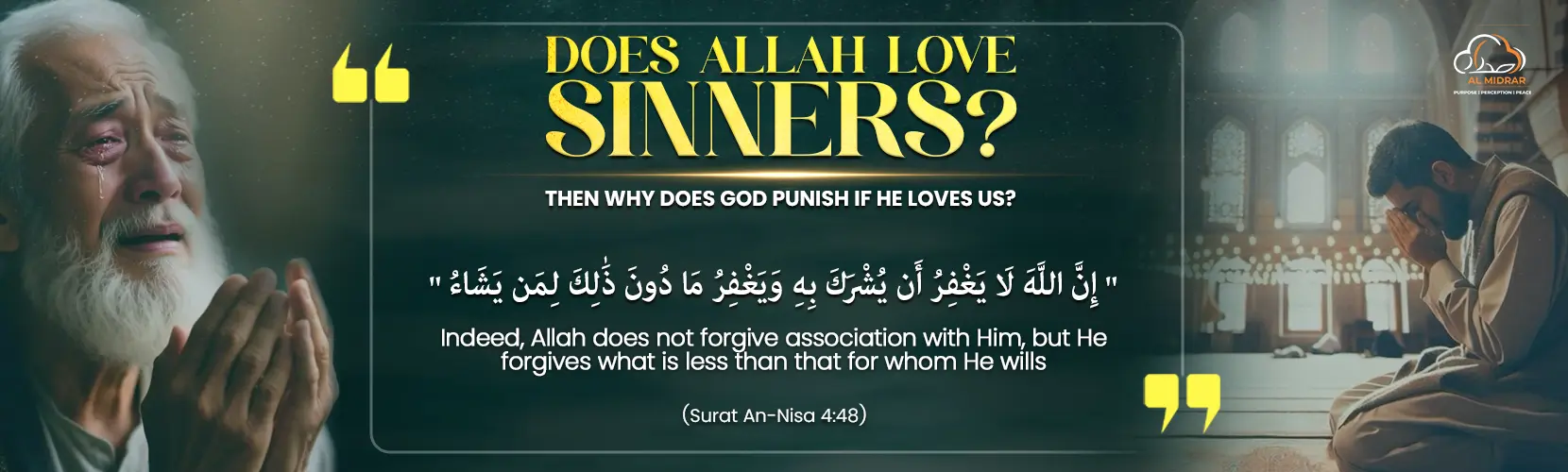
That phrase, "for whom He wills," is doing real work in this ayah. Forgiveness for sin is not automatic the moment you say astaghfirullah, it is conditioned on sincerity, on repentance, and where another person was harmed, on making things right with them.
So Why Does Allah Punish People If he loves them ?
The first thing to understand is who Allah is. He is Al-Khaliq, the Creator. We exist because He willed it. We do not get to set the terms of this relationship. He does. And part of those terms is that this world was built on a foundation of order and accountability, not because He needs our obedience, but because without it, the world as a functional place for human beings simply falls apart.
And Allah says so directly. In Surah Al-Baqarah, after describing how Dawud ﷺ defeated Jalut and the order of creation was preserved, Allah makes this principle explicit:

A scholar’s tafsir on this verse says it plainly: Allah allows nations to rise and attain power within limits, but when any nation begins to commit wrongs and exceed those limits, He brings forth another as a counterweight. No empire, no dynasty, no kingdom built on oppression was ever meant to last. The rise and fall of those in power is not random politics or historical coincidence. It is Allah's mechanism for keeping corruption from becoming the permanent condition of the earth.
This is why Thamud fell. This is why 'Ad was erased. Look at what the Quran tells us about these nations, they were not destroyed simply for disbelief. Allah says in Surah Hud:
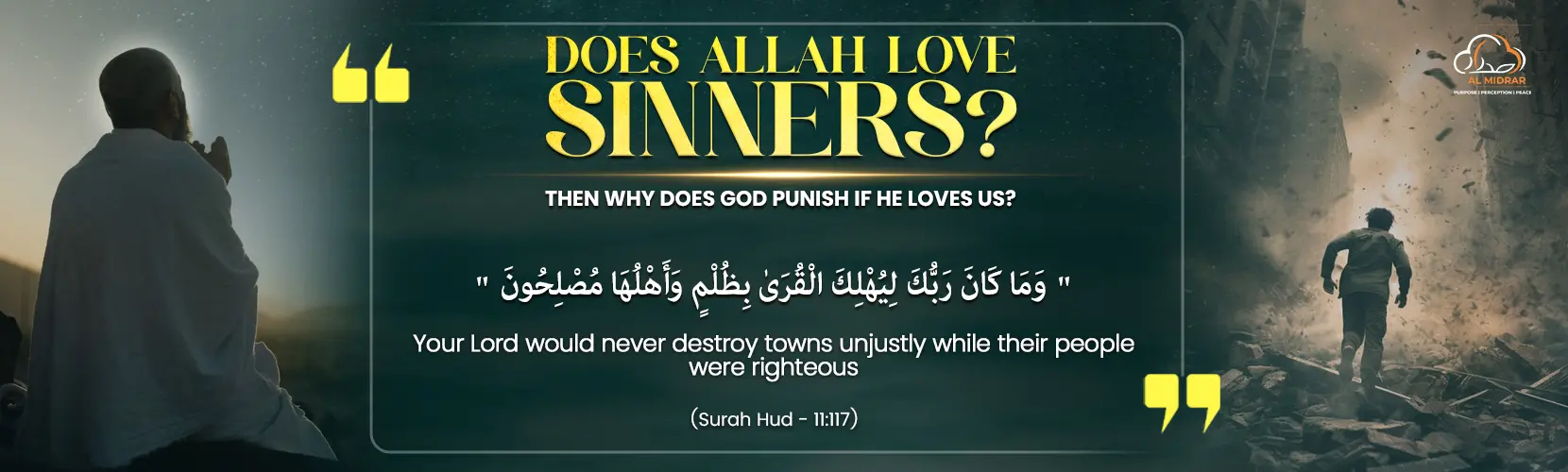
The tafsir of this verse clarifies something important: divine punishment in this world does not fall on a people simply because they disbelieve. It falls when they spread fasad (corruption), when they oppress, when they have crossed every line and their society can no longer function justly. 'Ad were among the strongest people on earth. Prophet Hud ﷺ was sent to them repeatedly. They didn't just disbelieve, they oppressed, they mocked, they persisted. And the wind that destroyed them in seven nights and eight days, not a drop of it was unjust. Surah Al-Haqqah documents their end without flinching, and the Quran then turns to the Quraysh and essentially says: do you see any of them remaining? (69:8). The ruins were left standing as a lesson, some visible like Thamud's rock-carved homes, others erased entirely like 'Ad. Even the category of destruction Allah chose was a message.
Allah says Himself in Surah Al-Ma'idah:
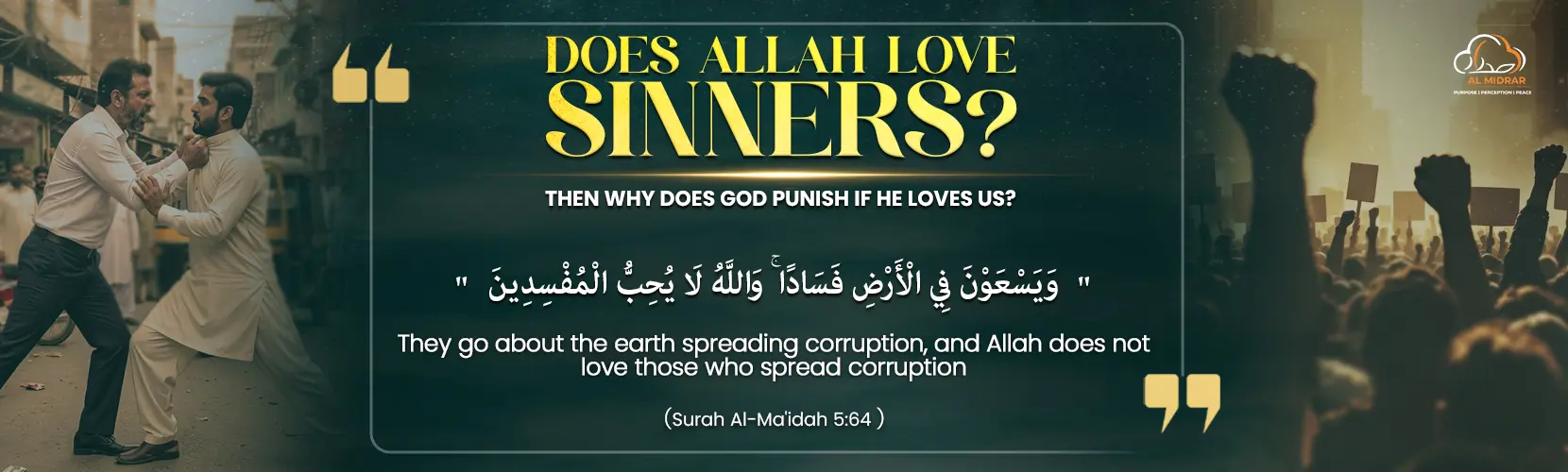
Not "does not like." Does not love. This is not the language of someone being tested. This is a clear statement about a category of people who have removed themselves from the mercy we discussed in blog one, not by sinning and feeling guilt, but by deliberately spreading harm as a way of life.
So when you ask why Allah punishes, the answer is not that He punishes arbitrarily or to satisfy some need for revenge. Punishment at the level of nations exists to remove what cannot reform itself, to check one people by means of another, and to protect the earth from being handed over entirely to those who would make it uninhabitable for everyone else. Pharaoh and Bani Israel cannot be made equal. Hitler and the victims of the Holocaust cannot be made equal. A God who treated them the same would not be worth calling just.
And the punishment reserved in the Akhirah for those who caused harm without repentance is the completion of that same justice, the portion that the dunya did not settle.
Why Would God Punish People for Eternity?
This is the question that troubles people most, and I won't pretend it's a comfortable one.
Let me give you an analogy before the theology. A man pulls a trigger. The act itself takes less than a second, half a second of motion, half a second of decision. But that bullet kills a father. His children grow up without him. His wife grieves for decades. His grandchildren never know him. The ripple of that half second spreads across generations of people who had nothing to do with it. Now tell me, should that man's punishment last only half a second because that is how long his act took? No sane person would accept that. The duration of a wrong act and the weight of its consequences are two completely separate things, and justice measures the second, not the first.
This is the principle behind eternal punishment, and it is not Allah being disproportionate. It follows from the nature of the choice itself.
Now here is where the Quran says something that people rarely sit with carefully. Allah describes the scene of these same people standing at the edge of the Fire on the Day of Judgement, and they plead:
"Would that we were sent back, then we would not deny the signs of our Lord, and we would be of the believers." It sounds like genuine remorse. It sounds like they finally understand. But Allah responds:
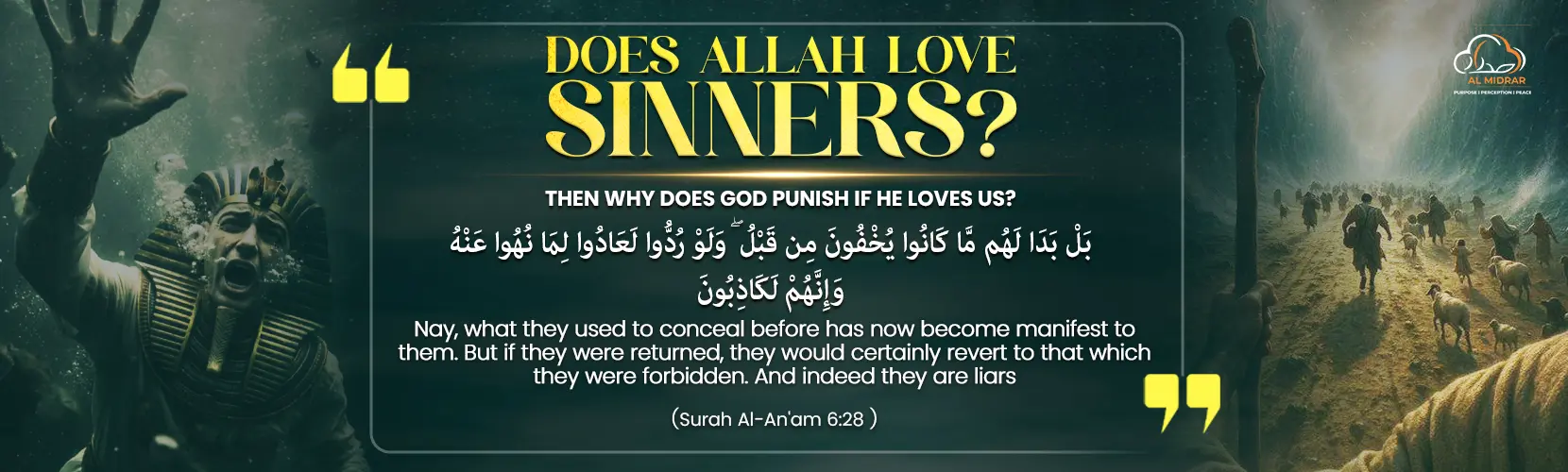
Ibn Kathir's commentary on this verse says plainly: they are not asking to go back because they genuinely want to change. They are asking to go back because they are terrified of what they are seeing in front of them. And Allah, who knows what is in every heart, says: send them back, and they would do the exact same things again.
Why? Because the exam would be the same. The dunya would still be the dunya, with all its glitter and insecurity and the constant fear of being left behind. The same love for status, for wealth, for comfort, the same anxiety about poverty, the same peer pressure, the same shortcuts, would all be waiting for them exactly as before. Their choices were never about ignorance, they were about preference. They saw the truth and chose the world instead, repeatedly, across a lifetime of chances. Returning them would not produce a different result. It would produce the same person making the same choices, because the heart that made those choices was never genuinely interested in change, only in escape from consequence.
This is what a permanent stance looks like. A life of deliberate, sustained choosing of the dunya over Allah, not once out of weakness but as a settled way of living, is met with a permanent consequence. The believer who sinned and kept turning back is in an entirely different category. Their account is being settled, not closed. There was still movement, still return, still a relationship however broken and repeatedly repaired. But the one this question is really about chose, with open eyes and across a lifetime of chances, to keep the door shut. And Allah, who gave them those chances, is not unjust for taking them at their word.
Where This Leaves You
If you're reading this and turning the question inward, wondering whether you fall into the category Allah forgives or the category Allah punishes, here is the honest answer. It is not about whether you have sinned, everyone has. It is about whether you are someone who keeps seeking forgiveness, who feels the weight of what you've done, who is trying, however imperfectly, to turn back. If that's you, the door is open, exactly as the last blog described.
But if you are the one still causing harm, still without remorse, still telling yourself it doesn't matter because Allah is merciful, that is not faith, that is using mercy as an excuse to avoid accountability. And Allah sees the difference, even if no one else does.
Common Questions I Hear About Allah and His Punishment
Does Allah love sinners?
Yes, those who sin, feel the weight of it, and keep returning to Him. That is a completely different category from someone who spreads harm deliberately and feels nothing.
Why does Allah allow criminals and oppressors to go unpunished in this world?
He often doesn't, history is full of nations Allah removed when their corruption could no longer be contained. And what the dunya does not settle, the Akhirah will.
Why would God punish people for eternity for a finite life?
Because justice measures the weight of the consequences, not the duration of the act. And because Allah Himself says that if these people were sent back, they would make the exact same choices again (6:28).
Is there a difference between Allah's love and a mother's love?
Yes. A mother's love is often unconditional regardless of harm caused. Allah's love operates within justice. He will not treat the oppressor and the oppressed the same.
What is the difference between huquq Allah and huquq al-'ibad in Islam?
حُقُوقُ اللَّهِ are sins between you and Allah, forgiven through sincere tawbah. حُقُوقُ الْعِبَادِ are rights owed to other people, and those cannot be waived by Allah alone. The person you wronged still has a claim.
Shaykh Atif
Assalamu alaikum. If you do not know me, I am Atif Ahmed, an Islamic scholar working for this ummah for over a decade. Over the years I have realised that people do not open up. They stay quiet about the questions that hurt them most. Identity, marriage, mental health, purpose and others.
So I decided to write about the topics that people are hesitant to address. Founder of AL-Midrar Institute.